
One read of Claude Developer Platformapi-20260928T160709Z
5 pages moved out of 637 read.
Pages moved
5
significant first
Pages read
637
in this capture
Captured
16:07 UTC
Corpus hash
1a4d0d0d7c23
index-hash
What this read moved
1-5 of 5agents-and-tools/tool-use/advisor-tool Changed · +16 / -15 lines
from line 341
341341| `advisor_redacted_result` | `encrypted_content`, `stop_reason` | The advisor model returns encrypted output. |
342342
343343<Note>
344 Claude Fable 5.1, Claude Mythos 5.1, Claude Opus 5, Claude Fable 5, and Claude Mythos 5 advisors return the encrypted `advisor_redacted_result`. Every other advisor model in the [compatibility table](https://platform.claude.com/docs/en/agents-and-tools/tool-use/advisor-tool#model-compatibility) returns the plaintext `advisor_result`. To read the advice text in your own responses, use an advisor that returns plaintext, such as `claude-opus-4-8`, where your executor's row in the [compatibility table](https://platform.claude.com/docs/en/agents-and-tools/tool-use/advisor-tool#model-compatibility) lists one. Claude Fable 5.1, Claude Mythos 5.1, Claude Opus 5, Claude Fable 5, and Claude Mythos 5 executors pair only with advisors that return the encrypted form, so on those executors the advice text isn't readable in the response.
344 Claude Fable 5.1, Claude Mythos 5.1, Claude Opus 5.5, Claude Opus 5, Claude Fable 5, and Claude Mythos 5 advisors return the encrypted `advisor_redacted_result`. Every other advisor model in the [compatibility table](https://platform.claude.com/docs/en/agents-and-tools/tool-use/advisor-tool#model-compatibility) returns the plaintext `advisor_result`. To read the advice text in your own responses, use an advisor that returns plaintext, such as `claude-opus-4-8`, where your executor's row in the [compatibility table](https://platform.claude.com/docs/en/agents-and-tools/tool-use/advisor-tool#model-compatibility) lists one. Claude Fable 5.1, Claude Mythos 5.1, Claude Opus 5.5, Claude Opus 5, Claude Fable 5, and Claude Mythos 5 executors pair only with advisors that return the encrypted form, so on those executors the advice text isn't readable in the response.
345345</Note>
346346
347347Here is the same request sent twice, identical except for the advisor `model` in the tool definition, showing both variants.
from line 1235
12351235
12361236The plain-text nudge is highly salient on Haiku and Sonnet executors: 74 percent (Sonnet) to 98 percent (Haiku) of nudged attempts in Anthropic's testing called the advisor immediately at turn 2. If that lands before your executor has read the problem or gathered context, the resulting advisor call is low-context and can displace a better-timed later call. Measure your executor's baseline first-call turn before adding the nudge. If the executor already calls the advisor reliably and its first call typically lands at turn N, set `NUDGE_TURN` greater than N. In Anthropic's testing, a turn-2 nudge on workloads where the baseline first call was turn 7 or later correlated with a 3 to 4 percentage-point task-performance drop. On a browse workload where the baseline call rate was 86 percent, the same nudge raised engagement with no task-performance cost.
12371237
1238To force a consult on a specific request instead of nudging, set `tool_choice` to `{"type": "tool", "name": "advisor"}`, subject to the constraints in [Forcing tool use](https://platform.claude.com/docs/en/agents-and-tools/tool-use/define-tools#forcing-tool-use). Forcing tool use cannot be combined with manual extended thinking (`thinking: {type: "enabled"}`): the API returns a `400 invalid_request_error` if you enable both. Adaptive thinking supports forced tool use. Claude Fable 5.1 and Claude Mythos 5.1 executors reject `tool_choice` types `tool` and `any`, so use the prompt nudge on those models instead.
1238To force a consult on a specific request instead of nudging, set `tool_choice` to `{"type": "tool", "name": "advisor"}`, subject to the constraints in [Forcing tool use](https://platform.claude.com/docs/en/agents-and-tools/tool-use/define-tools#forcing-tool-use). Forcing tool use cannot be combined with manual extended thinking (`thinking: {type: "enabled"}`): the API returns a `400 invalid_request_error` if you enable both. Adaptive thinking supports forced tool use. Claude Opus 5.5, Claude Fable 5.1, and Claude Mythos 5.1 executors reject `tool_choice` types `tool` and `any`, so use the prompt nudge on those models instead.
12391239
12401240## Streaming
12411241
from line 1807
18071807
18081808The executor model (the top-level `model` field) and the advisor model (the `model` field inside the tool definition) must form a valid pair. The advisor must be Claude Sonnet 4.6 or a more capable model, and it must be at least as capable as the executor. Models of equal capability (for example, Claude Opus 4.7 and Claude Opus 4.8) can advise each other.
18091809
1810| Executor models | Advisor models |
1811| ------------------------------------- | ------------------------------------------------------------------------------------------------------------------------------------------------------------------------------------------------------------------------------------------------------------------------------------------------------------------------------------------------------- |
1812| Claude Haiku 4.5 (claude-haiku-4-5) | Claude Mythos 5.1 (claude-mythos-5-1) Claude Fable 5.1 (claude-fable-5-1) Claude Mythos 5 (claude-mythos-5) Claude Fable 5 (claude-fable-5) Claude Opus 5 (claude-opus-5) Claude Opus 4.8 (claude-opus-4-8) Claude Opus 4.7 (claude-opus-4-7) Claude Opus 4.6 (claude-opus-4-6) Claude Sonnet 5 (claude-sonnet-5) Claude Sonnet 4.6 (claude-sonnet-4-6) |
1813| Claude Sonnet 4.6 (claude-sonnet-4-6) | Claude Mythos 5.1 (claude-mythos-5-1) Claude Fable 5.1 (claude-fable-5-1) Claude Mythos 5 (claude-mythos-5) Claude Fable 5 (claude-fable-5) Claude Opus 5 (claude-opus-5) Claude Opus 4.8 (claude-opus-4-8) Claude Opus 4.7 (claude-opus-4-7) Claude Opus 4.6 (claude-opus-4-6) Claude Sonnet 5 (claude-sonnet-5) Claude Sonnet 4.6 (claude-sonnet-4-6) |
1814| Claude Sonnet 5 (claude-sonnet-5) | Claude Mythos 5.1 (claude-mythos-5-1) Claude Fable 5.1 (claude-fable-5-1) Claude Mythos 5 (claude-mythos-5) Claude Fable 5 (claude-fable-5) Claude Opus 5 (claude-opus-5) Claude Opus 4.8 (claude-opus-4-8) Claude Opus 4.7 (claude-opus-4-7) Claude Sonnet 5 (claude-sonnet-5) |
1815| Claude Opus 4.6 (claude-opus-4-6) | Claude Mythos 5.1 (claude-mythos-5-1) Claude Fable 5.1 (claude-fable-5-1) Claude Mythos 5 (claude-mythos-5) Claude Fable 5 (claude-fable-5) Claude Opus 5 (claude-opus-5) Claude Opus 4.8 (claude-opus-4-8) Claude Opus 4.7 (claude-opus-4-7) Claude Opus 4.6 (claude-opus-4-6) Claude Sonnet 5 (claude-sonnet-5) |
1816| Claude Opus 4.7 (claude-opus-4-7) | Claude Mythos 5.1 (claude-mythos-5-1) Claude Fable 5.1 (claude-fable-5-1) Claude Mythos 5 (claude-mythos-5) Claude Fable 5 (claude-fable-5) Claude Opus 5 (claude-opus-5) Claude Opus 4.8 (claude-opus-4-8) Claude Opus 4.7 (claude-opus-4-7) |
1817| Claude Opus 4.8 (claude-opus-4-8) | Claude Mythos 5.1 (claude-mythos-5-1) Claude Fable 5.1 (claude-fable-5-1) Claude Mythos 5 (claude-mythos-5) Claude Fable 5 (claude-fable-5) Claude Opus 5 (claude-opus-5) Claude Opus 4.8 (claude-opus-4-8) Claude Opus 4.7 (claude-opus-4-7) |
1818| Claude Opus 5 (claude-opus-5) | Claude Mythos 5.1 (claude-mythos-5-1) Claude Fable 5.1 (claude-fable-5-1) Claude Mythos 5 (claude-mythos-5) Claude Fable 5 (claude-fable-5) Claude Opus 5 (claude-opus-5) |
1819| Claude Fable 5 (claude-fable-5) | Claude Mythos 5.1 (claude-mythos-5-1) Claude Fable 5.1 (claude-fable-5-1) Claude Mythos 5 (claude-mythos-5) Claude Fable 5 (claude-fable-5) Claude Opus 5 (claude-opus-5) |
1820| Claude Mythos 5 (claude-mythos-5) | Claude Mythos 5.1 (claude-mythos-5-1) Claude Fable 5.1 (claude-fable-5-1) Claude Mythos 5 (claude-mythos-5) Claude Fable 5 (claude-fable-5) Claude Opus 5 (claude-opus-5) |
1821| Claude Fable 5.1 (claude-fable-5-1) | Claude Mythos 5.1 (claude-mythos-5-1) Claude Fable 5.1 (claude-fable-5-1) |
1822| Claude Mythos 5.1 (claude-mythos-5-1) | Claude Mythos 5.1 (claude-mythos-5-1) Claude Fable 5.1 (claude-fable-5-1) |
1810| Executor models | Advisor models |
1811| ------------------------------------- | ----------------------------------------------------------------------------------------------------------------------------------------------------------------------------------------------------------------------------------------------------------------------------------------------------------------------------------------------------------------------------------------- |
1812| Claude Haiku 4.5 (claude-haiku-4-5) | Claude Mythos 5.1 (claude-mythos-5-1) Claude Fable 5.1 (claude-fable-5-1) Claude Mythos 5 (claude-mythos-5) Claude Fable 5 (claude-fable-5) Claude Opus 5.5 (claude-opus-5-5) Claude Opus 5 (claude-opus-5) Claude Opus 4.8 (claude-opus-4-8) Claude Opus 4.7 (claude-opus-4-7) Claude Opus 4.6 (claude-opus-4-6) Claude Sonnet 5 (claude-sonnet-5) Claude Sonnet 4.6 (claude-sonnet-4-6) |
1813| Claude Sonnet 4.6 (claude-sonnet-4-6) | Claude Mythos 5.1 (claude-mythos-5-1) Claude Fable 5.1 (claude-fable-5-1) Claude Mythos 5 (claude-mythos-5) Claude Fable 5 (claude-fable-5) Claude Opus 5.5 (claude-opus-5-5) Claude Opus 5 (claude-opus-5) Claude Opus 4.8 (claude-opus-4-8) Claude Opus 4.7 (claude-opus-4-7) Claude Opus 4.6 (claude-opus-4-6) Claude Sonnet 5 (claude-sonnet-5) Claude Sonnet 4.6 (claude-sonnet-4-6) |
1814| Claude Sonnet 5 (claude-sonnet-5) | Claude Mythos 5.1 (claude-mythos-5-1) Claude Fable 5.1 (claude-fable-5-1) Claude Mythos 5 (claude-mythos-5) Claude Fable 5 (claude-fable-5) Claude Opus 5.5 (claude-opus-5-5) Claude Opus 5 (claude-opus-5) Claude Opus 4.8 (claude-opus-4-8) Claude Opus 4.7 (claude-opus-4-7) Claude Sonnet 5 (claude-sonnet-5) |
1815| Claude Opus 4.6 (claude-opus-4-6) | Claude Mythos 5.1 (claude-mythos-5-1) Claude Fable 5.1 (claude-fable-5-1) Claude Mythos 5 (claude-mythos-5) Claude Fable 5 (claude-fable-5) Claude Opus 5.5 (claude-opus-5-5) Claude Opus 5 (claude-opus-5) Claude Opus 4.8 (claude-opus-4-8) Claude Opus 4.7 (claude-opus-4-7) Claude Opus 4.6 (claude-opus-4-6) Claude Sonnet 5 (claude-sonnet-5) |
1816| Claude Opus 4.7 (claude-opus-4-7) | Claude Mythos 5.1 (claude-mythos-5-1) Claude Fable 5.1 (claude-fable-5-1) Claude Mythos 5 (claude-mythos-5) Claude Fable 5 (claude-fable-5) Claude Opus 5.5 (claude-opus-5-5) Claude Opus 5 (claude-opus-5) Claude Opus 4.8 (claude-opus-4-8) Claude Opus 4.7 (claude-opus-4-7) |
1817| Claude Opus 4.8 (claude-opus-4-8) | Claude Mythos 5.1 (claude-mythos-5-1) Claude Fable 5.1 (claude-fable-5-1) Claude Mythos 5 (claude-mythos-5) Claude Fable 5 (claude-fable-5) Claude Opus 5.5 (claude-opus-5-5) Claude Opus 5 (claude-opus-5) Claude Opus 4.8 (claude-opus-4-8) Claude Opus 4.7 (claude-opus-4-7) |
1818| Claude Opus 5 (claude-opus-5) | Claude Mythos 5.1 (claude-mythos-5-1) Claude Fable 5.1 (claude-fable-5-1) Claude Mythos 5 (claude-mythos-5) Claude Fable 5 (claude-fable-5) Claude Opus 5.5 (claude-opus-5-5) Claude Opus 5 (claude-opus-5) |
1819| Claude Opus 5.5 (claude-opus-5-5) | Claude Mythos 5.1 (claude-mythos-5-1) Claude Fable 5.1 (claude-fable-5-1) Claude Mythos 5 (claude-mythos-5) Claude Fable 5 (claude-fable-5) Claude Opus 5.5 (claude-opus-5-5) Claude Opus 5 (claude-opus-5) |
1820| Claude Fable 5 (claude-fable-5) | Claude Mythos 5.1 (claude-mythos-5-1) Claude Fable 5.1 (claude-fable-5-1) Claude Mythos 5 (claude-mythos-5) Claude Fable 5 (claude-fable-5) Claude Opus 5.5 (claude-opus-5-5) Claude Opus 5 (claude-opus-5) |
1821| Claude Mythos 5 (claude-mythos-5) | Claude Mythos 5.1 (claude-mythos-5-1) Claude Fable 5.1 (claude-fable-5-1) Claude Mythos 5 (claude-mythos-5) Claude Fable 5 (claude-fable-5) Claude Opus 5.5 (claude-opus-5-5) Claude Opus 5 (claude-opus-5) |
1822| Claude Fable 5.1 (claude-fable-5-1) | Claude Mythos 5.1 (claude-mythos-5-1) Claude Fable 5.1 (claude-fable-5-1) |
1823| Claude Mythos 5.1 (claude-mythos-5-1) | Claude Mythos 5.1 (claude-mythos-5-1) Claude Fable 5.1 (claude-fable-5-1) |
18231824
18241825If you request an invalid pair, the API returns a `400 invalid_request_error` naming the unsupported combination.
18251826
build-with-claude/thinking Changed · +24 / -4 lines
from line 10
1010
1111A model that answers in a single pass has to get everything right on the first try: no scratch work, no checking, no changing course halfway through. For a proof, a tricky bug, or a long agentic task, the first approach is often not the best one.
1212
13Thinking removes that constraint. When thinking is active, Claude works through the problem in its own words before answering: it restates what is being asked, tries approaches, checks intermediate results, and abandons paths that do not hold up. That reasoning arrives in `thinking` content blocks ahead of the response, and Claude draws on it to produce the final answer. This is why thinking improves performance on complex tasks like math, coding, analysis, and long-running agentic work, where the quality of the answer depends on intermediate work that would otherwise be compressed into the response itself or skipped.
13Thinking removes that constraint. When thinking is active, Claude works through the problem in its own words before answering: it restates what is being asked, tries approaches, checks intermediate results, and abandons paths that do not hold up. That up-front thinking arrives in `thinking` content blocks ahead of the response, and Claude draws on it to produce the final answer. This is why thinking improves performance on complex tasks like math, coding, analysis, and long-running agentic work, where the quality of the answer depends on intermediate work that would otherwise be compressed into the response itself or skipped.
1414
1515Thinking has a cost: the tokens Claude spends reasoning are billed as output tokens, even when the thinking text isn't returned to you, and they count toward `max_tokens` alongside the response text. This page covers how thinking behaves across the API surface: turning it on, reading its output, and managing its interactions with tools, streaming, caching, and the context window.
1616
1717## How thinking works
1818
19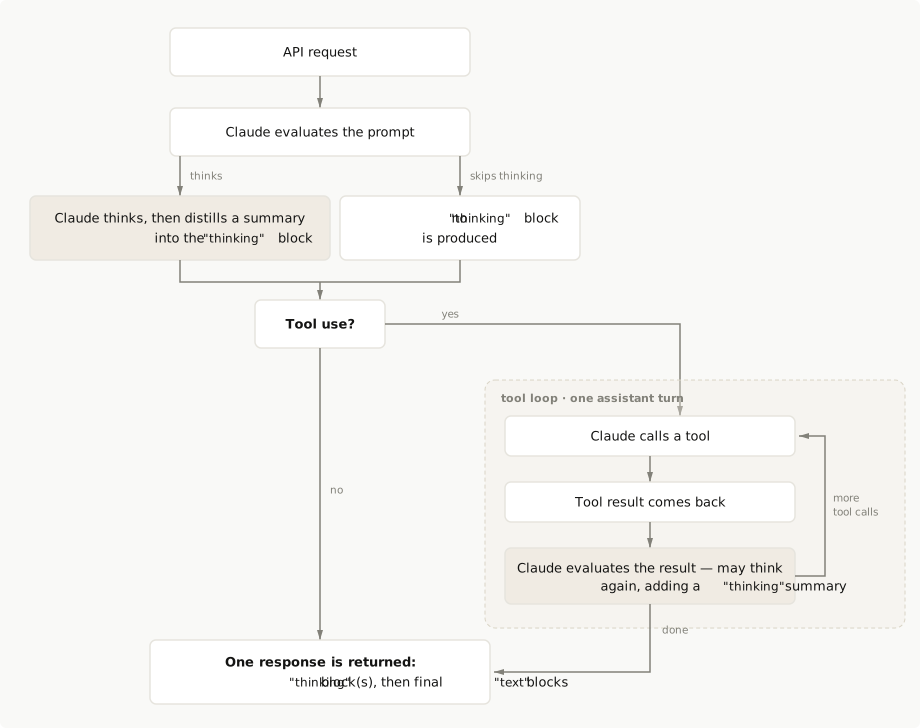
19
2020
2121Whether Claude thinks on a given request, and how deeply, depends on your thinking configuration and the complexity of the request.
2222
23Here is what thinking looks like in a response: one or more `thinking` content blocks arrive before the `text` blocks. The thinking block is still generated content, like the `text` block that follows it, but it is separated from the canonical response. Each thinking block also carries a `signature` field, an encrypted copy of the full reasoning that you pass back unchanged in multi-turn and tool-use conversations (see [Thinking encryption](https://platform.claude.com/docs/en/build-with-claude/thinking#thinking-encryption)):
23Here is what up-front thinking looks like in a response: one or more `thinking` content blocks arrive before the `text` blocks. The thinking block is still generated content, like the `text` block that follows it, but it is separated from the canonical response. Each thinking block also carries a `signature` field, an encrypted copy of the full reasoning that you pass back unchanged in multi-turn and tool-use conversations (see [Thinking encryption](https://platform.claude.com/docs/en/build-with-claude/thinking#thinking-encryption)):
2424
2525```json
2626{
from line 44
4444
4545## Configuring thinking
4646
47On most models, thinking is on by default or one parameter away. Which configuration each model accepts, and what it defaults to, is listed in the [per-model configuration table](https://platform.claude.com/docs/en/build-with-claude/thinking-troubleshooting#supported-models) on the Troubleshooting page.
47On most models, thinking is on by default or one parameter away. The following table shows what each model does with each `thinking` value a request can send. A 400 error means the API rejects the request, and [Troubleshooting thinking](https://platform.claude.com/docs/en/build-with-claude/thinking-troubleshooting) has each error and its fix.
48
49| Model | No `thinking` field | `"adaptive"` | `"enabled"` with `budget_tokens` | `"disabled"` |
50| --------------------- | ------------------- | ----------------- | -------------------------------- | -------------------------------------- |
51| Claude Opus 5.5 | Adaptive thinking | Adaptive thinking | 400 error | 400 error |
52| Claude Fable 5.1 | Adaptive thinking | Adaptive thinking | 400 error | 400 error |
53| Claude Mythos 5.1 | Adaptive thinking | Adaptive thinking | 400 error | 400 error |
54| Claude Fable 5 | Adaptive thinking | Adaptive thinking | 400 error | 400 error |
55| Claude Mythos 5 | Adaptive thinking | Adaptive thinking | 400 error | 400 error |
56| Claude Opus 5 | Adaptive thinking | Adaptive thinking | 400 error | Thinking off at `high` effort or below |
57| Claude Sonnet 5 | Adaptive thinking | Adaptive thinking | 400 error | Thinking off |
58| Claude Opus 4.8 | Thinking off | Adaptive thinking | 400 error | Thinking off |
59| Claude Opus 4.7 | Thinking off | Adaptive thinking | 400 error | Thinking off |
60| Claude Mythos Preview | Adaptive thinking | Adaptive thinking | Extended thinking | 400 error |
61| Claude Opus 4.6 | Thinking off | Adaptive thinking | Extended thinking (deprecated) | Thinking off |
62| Claude Sonnet 4.6 | Thinking off | Adaptive thinking | Extended thinking (deprecated) | Thinking off |
63| Claude Opus 4.5 | Thinking off | 400 error | Extended thinking | Thinking off |
64| Claude Sonnet 4.5 | Thinking off | 400 error | Extended thinking | Thinking off |
65| Claude Haiku 4.5 | Thinking off | 400 error | Extended thinking | Thinking off |
66
67In the table, "at `high` effort or below" means the request works at `low`, `medium`, and `high` effort and returns a 400 error at `xhigh` or `max`.
4868
4969On Claude Opus 5.5, Claude Opus 5, Claude Sonnet 5, Claude Fable 5.1, Claude Mythos 5.1, Claude Fable 5, Claude Mythos 5, and Claude Mythos Preview, thinking is already on and needs no configuration. `display` defaults to `"omitted"` on these models, so the thinking text is hidden until you opt in. Opt in with `thinking: {"type": "adaptive", "display": "summarized"}`, which is exactly the following request with the [model string](https://platform.claude.com/docs/en/models/overview) swapped.
5070
agents-and-tools/tool-use/web-search-tool Changed · +1 / -1 lines
from line 234
234234## How to use web search
235235
236236<Note>
237 Web search is enabled for your organization unless an administrator has disabled it in the [Claude Console](https://platform.claude.com/settings/privacy), where they can also restrict which domains it searches. If it's disabled, a request that includes the tool fails with a 400 `invalid_request_error` that says web search is not enabled, rather than an [error code](https://platform.claude.com/docs/en/agents-and-tools/tool-use/web-search-tool#errors) inside a search result.
237 Web search is enabled for your organization unless an administrator has disabled it in the [Claude Console](https://platform.claude.com/settings/capabilities), where they can also restrict which domains it searches. If it's disabled, a request that includes the tool fails with a 400 `invalid_request_error` that says web search is not enabled, rather than an [error code](https://platform.claude.com/docs/en/agents-and-tools/tool-use/web-search-tool#errors) inside a search result.
238238</Note>
239239
240240These organization-level settings in the Claude Console apply to Messages API requests only. [Claude Managed Agents](https://platform.claude.com/docs/en/managed-agents/overview) sessions use only the per-tool `allowed_domains` and `blocked_domains` lists on the agent toolset; see [Restrict web search and web fetch domains](https://platform.claude.com/docs/en/managed-agents/tools#restrict-web-search-and-web-fetch-domains).
build-with-claude/preserved-thinking Changed · +1 / -1 lines
from line 39
3939
4040Keep sending the full history on every request, thinking blocks included, and let the API drop what the current model can't read. The API never edits your `messages` array, so the dropped blocks stay in your history. When the same history goes back to Claude Fable 5.1, its blocks are readable again, along with the earlier model's thinking. The reasoning is lost for good only if your client removes the blocks itself, for example a harness that strips thinking on a model switch or rebuilds the history from what each model used.
4141
42
42
4343
4444With the `thinking-binding-controls-2026-08-01` [beta header](https://platform.claude.com/docs/en/api/beta-headers), the response lists each dropped block in a top-level `input_transformations` array with `reason: "model_binding_mismatch"`:
4545
cli-sdks-libraries/overview Changed · +2 / -2 lines
from line 1
11---
2title: CLI, SDKs, and libraries
2title: SDKs, CLI, and libraries
33url: https://platform.claude.com/docs/en/cli-sdks-libraries/overview
4description: "Official tools for building with the Claude API: the ant CLI, client SDKs in seven languages, and framework-specific libraries."
4description: "Official tools for building with the Claude API: client SDKs in seven languages, the ant CLI, and framework-specific libraries."
55---
66
77Anthropic provides three kinds of official tooling for building with the Claude API: